
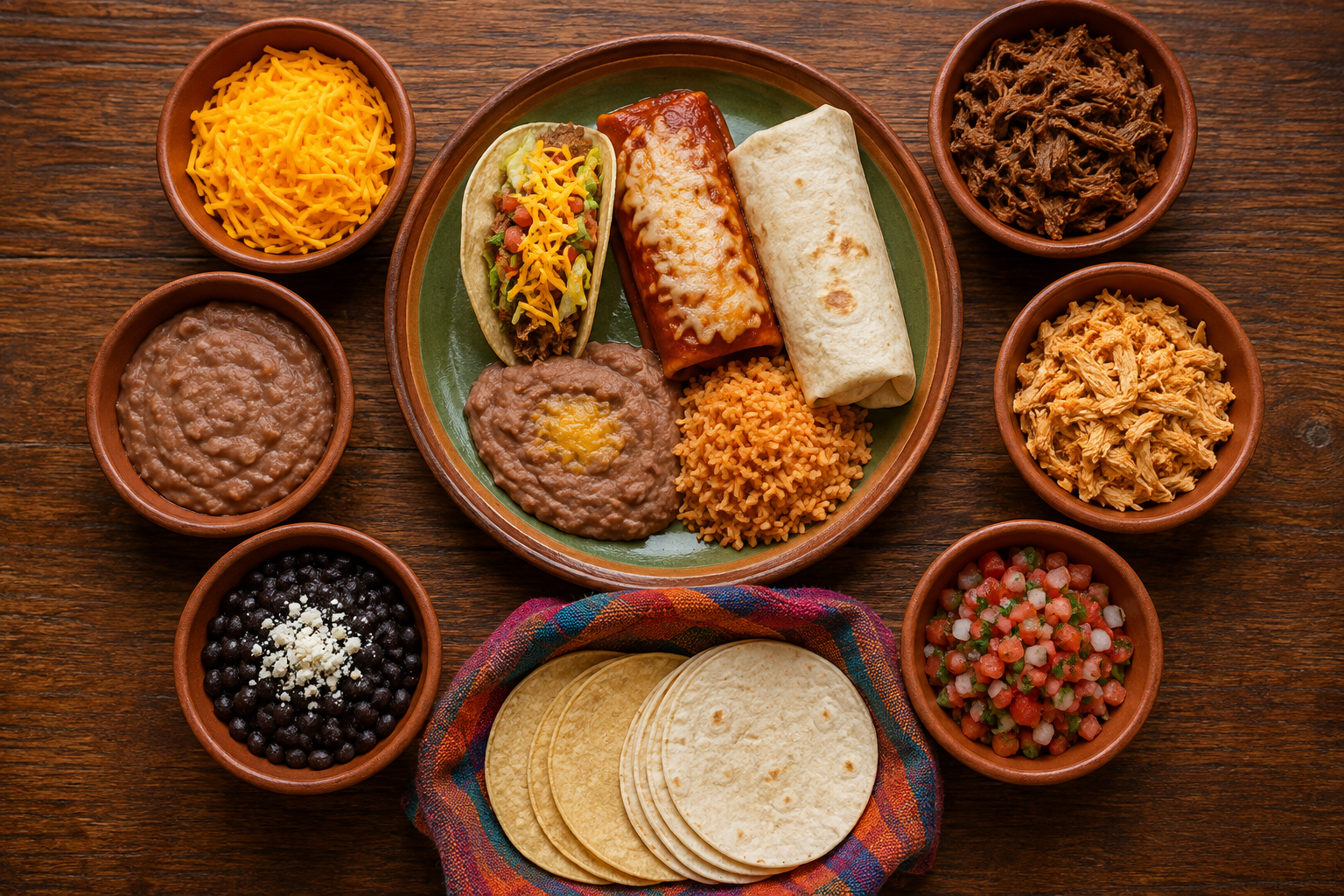
Sitting down at a classic Mexican restaurant usually means opening a menu with endless choices. Page one has a dozen burritos. Page two features an array of enchiladas. Then comes a page for fajitas, followed by tacos, tostadas, and chimichangas. Flip to the back, and there are dozens of distinct combination plates: Combo #12 (a beef burrito and cheese enchilada), Combo #14 (two tacos and a tostada), Combo #27 (a chimichanga paired with a tamale).
It feels like an unmanageable variety. But in reality, nothing on that menu is wildly unique.
Put a blindfold on even the most enthusiastic Mexican food fan and serve up a selection of menu items. Stripped of visual cues, discerning one combo from the next is nearly impossible.
The secret behind the kitchen operations is simple: the sprawling menu is built from a surprisingly small set of core ingredients — tortillas, seasoned proteins, cheese, beans, rice, salsa, etc. The endless menu is just different structural arrangements, cooking methods, and presentations of common foundational elements.
This culinary phenomenon maps directly to the commercial ecosystem and what comes out of the marketing, sales, and product kitchens.
Aligning Sales, Marketing, and Product Development teams often involves endless debates over strategies and tactics, assets and artifacts. Sales demands a fresh pitch deck. Marketing makes a new white paper, email sequence, or landing page. Product Development builds a distinct feature roadmap. Organizations treat these items as fundamentally different operational beasts, cooking every meal from scratch in separate kitchens, with different ingredients.
The result is classic commercial chaos. Sales pitches a burrito. Marketing publishes an enchilada. Product builds a fajita platter.
Because teams miss that they are serving the same thing just with different labels, internal silos are reinforced, the business comes to a standstill, and patrons are frustrated. But when the core ingredients in the back kitchen are clearly identified, kept fresh, prepped, and properly organized, those foundational components can construct every commercial asset required.
What are these core ingredients and essential building blocks of every commercial ecosystem? Who, Why, and How.
The Who: The specific persona and segment being served: vegetarians, kids, or those who hate cilantro.
The Why: The operational friction or pain point requiring resolution: wildly hungover, or ready to celebrate.
The How: The journey desired: on-the-go or a sit-down experience.
With these core ingredients thoroughly defined and available in the commercial pantry, sales calls excel, marketing content scales, and product roadmaps deliver. Here are three examples:
Three Examples of Applying Core Ingredients Across the Commercial Kitchen
Pitch Decks & Proposals. Sales reps often spend massive amounts of time building customized pitch decks and proposal narratives for individual deals, leading to inconsistent positioning or promises the company won’t keep. A first-rate deck or proposal maps a specific buyer's pain (Who and Why) to their position in the journey and gives what they need to move forward (how). Reps stop making up narratives on the fly and instead quickly assemble validated ingredients tailored to the established who, why, and how.
Marketing Content. Marketing teams famously sink endless time into brainstorming novel campaign themes for white papers, landing pages, and ad copy across various stages of the funnel. They treat each asset as though it requires a completely new recipe and end up with a pile of content that really is no different than what was already made. The message may need to change with the stage of the journey. But the underlying customer problem shouldn't magically change because someone asked for a landing page instead of a white paper.
Product Roadmaps. Product teams get bogged down arbitrating conflicting feature requests from Sales, vocal customers, and engineering's own convictions. Customer A needs this. Prospect B won’t buy without that. Engineering has another idea altogether. Before long, the roadmap needs a team of private executive chefs to execute the menu. The same commercial ingredients that shape a sales conversation or marketing story should shape product decisions. Is this a problem worth solving? For whom? At what point in their journey? And does solving it fit the way the business intends to serve that market?
Stop treating every sales pitch, marketing asset, and product release as a unique culinary creation. Clean up the back kitchen, organize the core ingredients of Who, Why, and How, and the entire commercial engine can serve any combo plate the customer orders without breaking a sweat.
