
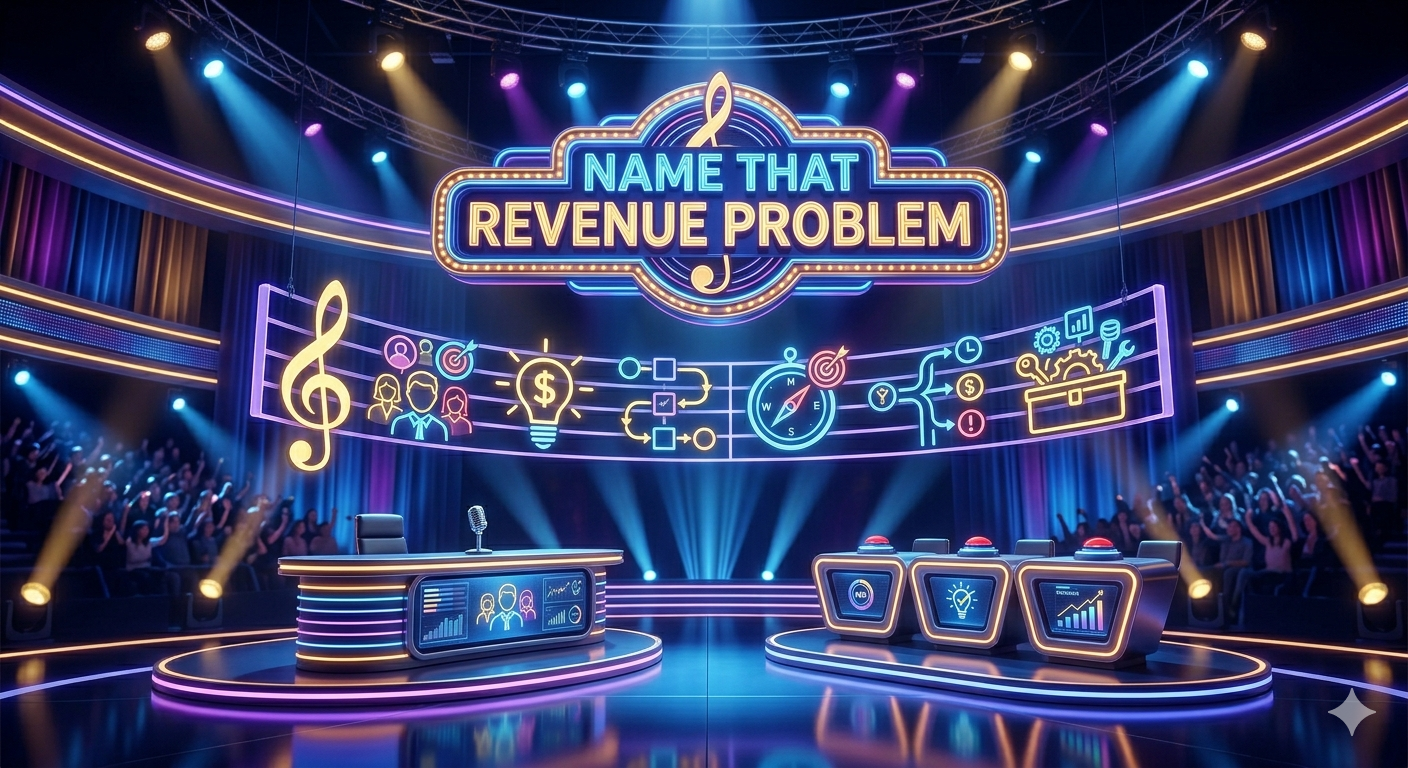
In the classic game show Name That Tune, contestants bet on the minimum number of notes required to identify a song. In the common reality show of Missed Revenue Targets, leadership teams often find themselves hearing a cacophony of reasons and excuses or screechy strategies for conducting a comeback tour.
Diagnosing the root cause of a stalled revenue engine doesn't require a 6-month audit or a 40-slide deck. Most problems reveal themselves in just six notes, played across two primary structures: The Customer Chord and The Operational Overture.
The Customer Chord: Who, Why, and How
Harmony resonates around the customer. If the three notes of who, why, and how are off-key, the audience won’t stay for the performance.
Who: This is the target audience, defined through market segmentation and a clear view of the people who need to be listening. If the "Who" is muffled, the product, operations, marketing, and sales teams waste performances on prospects that cannot or will not buy.
Why: This is the classical “value proposition”—not just the economic ROI, but the appeal to the core human values of specific influencers on the judging panel. Customers have a job to be done, and getting the desired outcome is the ultimate finale.
How: This is the buyer’s and customer’s journey. Sales friction is often from a tempo mismatch. Rhythm is disrupted when the organization imposes a sales process on prospects and customers that are marching to the beat of a different drummer.
The Operational Overture: Destination, Method, and Means
Even with an attentive audience, the music stops when the arrangement lacks connective bridges.
Destination: This is the SMART goal. Without a specific and time-bound objective, the jam session drifts until the song is lost.
Method: This is the chosen path to the destination selected from a set of viable options. It must consider three universal constraints: time, capital, and risk.
Means: These are the functional details—who does what by when with the specific knowledge, skills, and tools required to execute on a particular timeline. Without these instruments, it’s never more than an air guitar.
Revenue problems are rarely the result of a system-wide failure. Usually, it is a missed note in one of these six areas of the customer chord and operational overture: who, why, how, destination, method, and means.
Listen for the six notes. Find the one that doesn't ring true. Fix it for the crescendo.
